
2026-08-26 · Thomas Whitaker
Managing Attic Ventilation in Georgia's Humid Climate
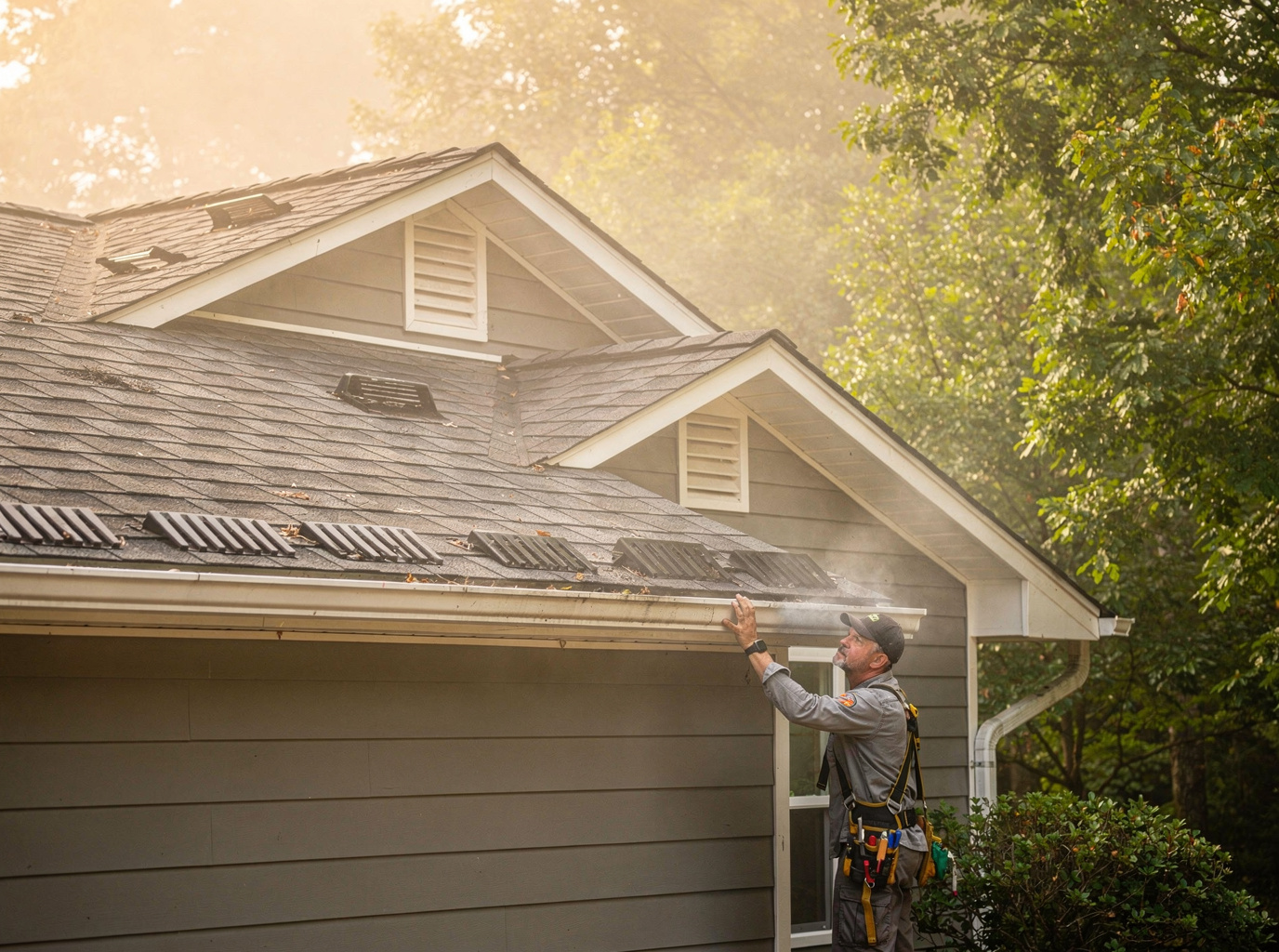
In Georgia's humid subtropical climate, managing attic ventilation starts with achieving 1:150 vent-to-attic floor ratio using balanced soffit intake and ridge exhaust to hold relative humidity below 60 percent during hot summers and mild winters. This approach reduces condensation risks on roof decking in older homes throughout Cobb County neighborhoods like Whitlock Heights and Forest Hills. Marietta Square and Downtown Marietta properties often feature attics with limited airflow due to tree cover near Glover Park and Kennesaw Mountain, which traps humidity and accelerates shingle degradation.
Why Humidity Levels Demand Specific Ventilation in Cobb County
Marietta's location in Cobb County exposes homes to prolonged high humidity from May through September, where temperatures frequently exceed 85 degrees and dew points stay above 70. These conditions drive moisture into attics through soffits and gable ends if exhaust paths are blocked. Homes in Forest Hills and Whitlock Heights built before 1990 commonly have 2x4 rafters with minimal insulation, making them prone to mold on OSB sheathing when ventilation falls short. Mild winters allow some drying, yet the cycle restarts each spring without consistent airflow. Proper ridge vent installation combined with continuous soffit vents maintains pressure differentials that pull humid air outward before it condenses on cooler roof surfaces.
Recognizing Ventilation Problems in Local Housing Stock
Signs of inadequate ventilation appear first as dark streaks on shingles along roof ridges in neighborhoods near the Marietta Museum of History. Homeowners may notice musty odors in upstairs rooms during summer evenings or see insulation clumps near eaves after heavy rains. In Smyrna and Roswell border areas, many two-story homes have cathedral ceilings that reduce attic space, concentrating moisture near bathroom exhaust fans that vent directly into the attic. Checking for these indicators during routine walks around the property helps catch issues before they reach roof decking. Consistent monitoring prevents larger problems that affect entire roof systems in older Marietta Square residences.
Steps to Improve Attic Airflow in Humid Conditions
Begin by calculating existing vent area against the 1:150 standard for your attic square footage. Add or enlarge soffit vents where tree canopies block natural wind near Kennesaw Mountain. Install or upgrade to a continuous ridge vent that runs the full length of the roof peak, ensuring it ties into existing shingle courses without creating new leak points. Pair this with powered attic fans only if static vents prove insufficient, setting thermostats to activate above 100 degrees. Seal penetrations from recessed lights and plumbing stacks to stop conditioned air from escaping upward. These adjustments work together to stabilize attic temperatures within 10-15 degrees of outside air during peak summer months.
Connecting Ventilation Work to Ongoing Roof Care
Attic ventilation improvements pair naturally with regular roof inspections that assess both exterior shingles and interior moisture levels. Roof inspection visits can identify blocked vents hidden by insulation or debris common in Marietta attics. Roof maintenance programs include clearing soffit screens and verifying ridge vent performance twice yearly. Homeowners in Powder Springs and nearby areas often combine these checks with the Spring Roof Inspection Checklist for Marietta Homes to catch seasonal changes early. Addressing ventilation during these visits keeps humidity-related damage from reaching the point of requiring full roof replacement.
Atlanta Top Quality Roofing operates Mon–Fri 9am–6pm and Sat 10am–3pm to support Marietta homeowners addressing attic ventilation concerns before they impact roof performance.