
2026-08-26 · Thomas Whitaker
Attic Insulation and Roof Performance in Atlanta Summers
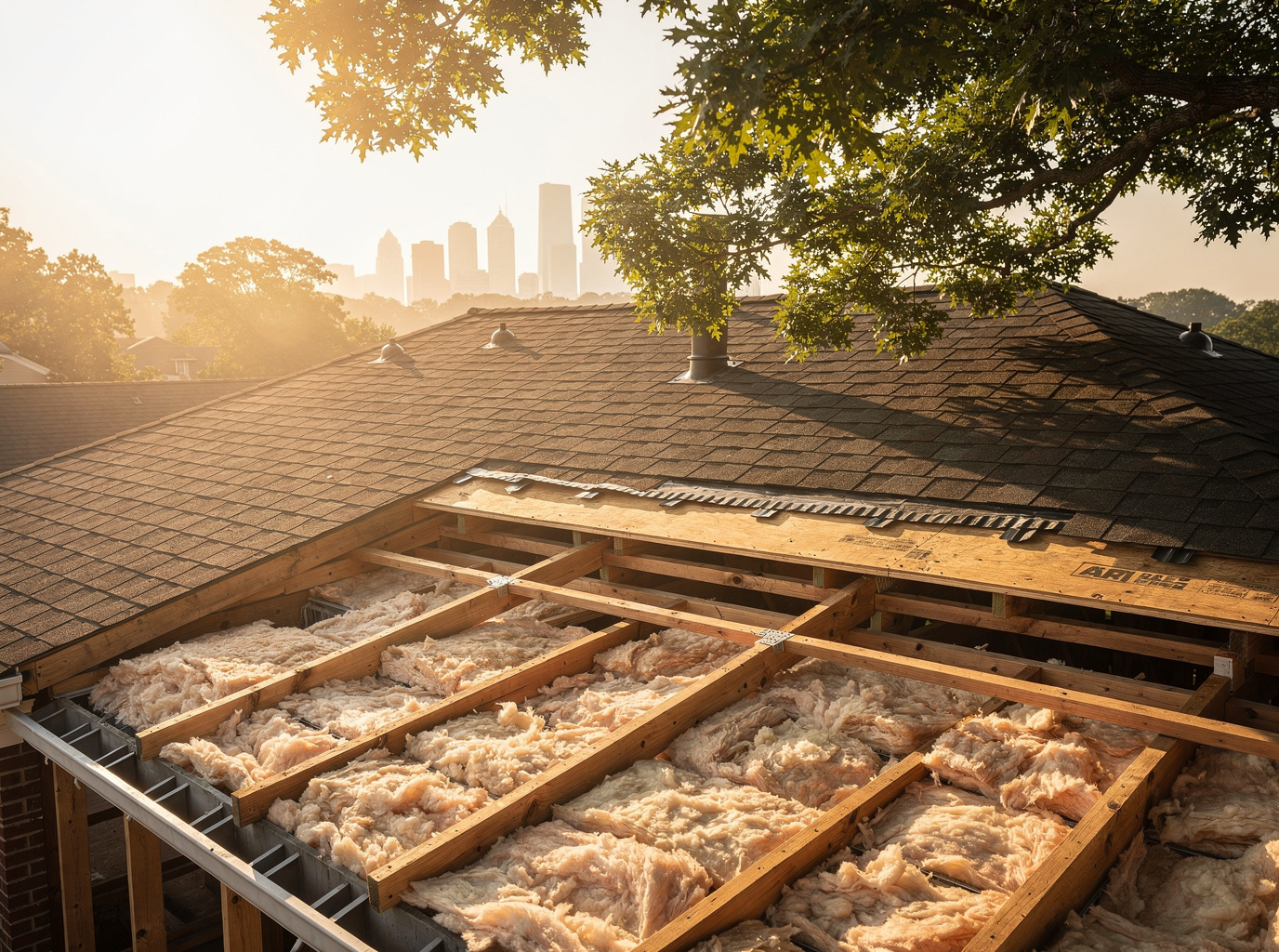
In Marietta summers, adding the right amount of attic insulation keeps roof deck temperatures 15-25 degrees cooler than uninsulated spaces, which slows shingle degradation and reduces the chance of heat-related blistering or cracking.
Summer Heat Patterns in Marietta Neighborhoods
Marietta's humid subtropical climate brings consistent highs above 90 degrees from June through August, with humidity that traps heat inside attics of older homes in Downtown Marietta and around Marietta Square. Homes in Whitlock Heights and Forest Hills often date to the 1960s and 1970s, when builders used minimal insulation and basic ridge vents. This combination lets solar gain push attic air past 140 degrees on clear days, softening asphalt shingles and accelerating granule loss. The same pattern appears in nearby Smyrna and Rosemont, where tree cover is lighter and roof slopes face direct afternoon sun. Kennesaw Mountain creates localized wind patterns that can either help or hinder natural attic airflow depending on the street. These conditions make insulation upgrades more valuable than in milder Georgia counties.
How Insulation Levels Change Roof Deck Temperatures
R-38 to R-49 insulation in the attic cuts conductive heat transfer enough to drop roof sheathing temperatures by 15-25 degrees during peak afternoon hours. Lower R-values common in pre-1980 Marietta homes allow heat to radiate downward onto shingles for longer periods, shortening their effective lifespan by several years. The effect compounds on south-facing slopes common in Forest Hills layouts. When insulation is compressed near recessed lights or missing around HVAC platforms, hot spots form that transfer directly to the roof deck. This localized overheating shows up first as cracked sealant on ridge caps and lifted shingle tabs. Adding insulation also lowers the load on attic-mounted HVAC ducts, which are frequent in Cobb County ranch homes.
Ventilation and Insulation Working Together
Attic ventilation must match insulation depth to avoid trapping moisture that rises from living spaces during humid Marietta summers. Ridge and soffit vents sized for the roof square footage move hot air out before it can degrade shingles from below. Managing Attic Ventilation in Georgia's Humid Climate explains the calculations needed for homes near Glover Park and the Marietta Museum of History. Without balanced airflow, even thick insulation can hold heat against the decking overnight. Regular checks of vent screens prevent pine needles and pollen from blocking exhaust paths, a common issue on streets bordering Kennesaw Mountain.
Practical Steps for Marietta Homeowners
Start with a visual inspection of insulation depth and coverage from the attic access point, looking for gaps around penetrations in homes built before 1990. Measure existing R-value with a simple probe and compare it to current recommendations for Cobb County. Schedule a roof inspection before adding insulation so any deck damage from prior heat stress can be addressed at the same time. Spring Roof Inspection Checklist for Marietta Homes outlines the exact items to review each March. Pair insulation work with roof maintenance visits to confirm flashing and underlayment remain intact after summer expansion cycles. These combined steps keep roof performance stable through repeated hot seasons without requiring full replacement ahead of schedule.