
2026-08-26 · Thomas Whitaker
Protecting Your Roof from Georgia Oak Tree Debris
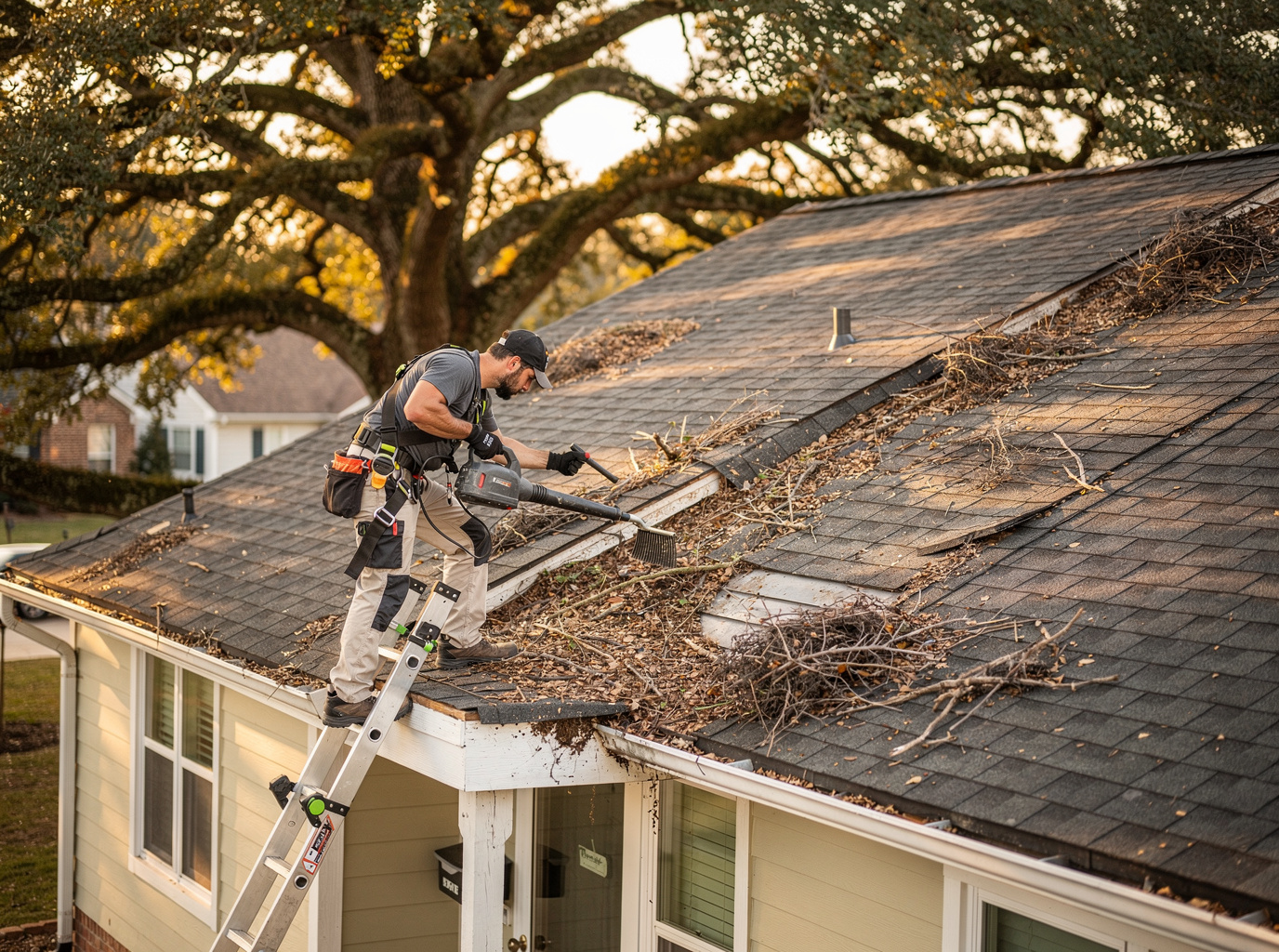
Georgia oak trees in Marietta drop leaves, acorns, and small branches that collect on roofs year-round, especially in fall and after summer storms. Homeowners in Downtown Marietta, Whitlock Heights, and Forest Hills see the heaviest buildup because mature oaks line streets and backyards near Glover Park and the Marietta Museum of History. Removing debris every four to six weeks during peak drop periods keeps water from pooling and reduces the chance of granule loss or moss growth on asphalt shingles common to Cobb County homes.
How Oak Debris Builds Up Around Marietta
Mature Georgia oaks near Kennesaw Mountain and Marietta Square shed more material than many other species because of their size and the county's mild winters that extend the growing season. In humid subtropical conditions, wet leaves stick to roof valleys and around chimneys on older homes in Whitlock Heights. Acorns roll into gutters and create dams during the next rain, forcing water under shingles. Homeowners who live within a block of Forest Hills or the square often notice twice the debris volume compared with newer subdivisions in nearby Smyrna. Regular raking from a safe ladder or hiring a service that uses soft-bristle equipment prevents the layer from compacting into a moisture trap that shortens roof life by several years.
Damage Patterns on Local Roofing Materials
Oak debris holds moisture against shingles and metal panels, which accelerates wear in Cobb County's hot summers and occasional winter freezes. In neighborhoods like Downtown Marietta, 20- to 30-year-old roofs show granule loss first along the lower courses where leaves pile up. Metal roofs in Rosemont can develop surface rust where acorns sit for weeks. The trapped organic matter also feeds algae streaks that are common on north-facing slopes. These patterns appear faster on homes with limited attic ventilation, a trait of many pre-1980 houses near the square. Spotting early staining or sagging in valleys lets owners address issues before leaks reach interior ceilings.
Practical Removal and Prevention Steps
Start with a visual check from the ground twice a month from September through December. Use a leaf blower on low power or a roof rake with a foam head to clear ridges and valleys without dislodging granules. Trim lower oak branches that hang within six feet of the roof edge to cut future drop volume. Install mesh gutter guards rated for 1/4-inch debris on homes in Forest Hills where acorn loads are heaviest. After each major storm, walk the perimeter and note any new piles near skylights or vents. These steps fit the mild winter window when daytime temperatures stay above 50 degrees and allow safe work before spring pollen adds another layer.
Scheduling Professional Checks
Schedule a roof inspection each spring and fall to catch hidden damage under compacted debris. Technicians can clear hard-to-reach areas around chimneys and evaluate flashing that leaves alone often conceal. Pair the visit with routine roof maintenance to extend service life on homes in Marietta's older sections. If you notice water stains on ceilings or granules in downspouts, book the inspection sooner rather than waiting for the next seasonal appointment. Owners in HOA-governed streets should also review the Understanding Marietta HOA Roofing Guidelines before any material changes. Atlanta Top Quality Roofing is available Mon–Fri 9am–6pm and Sat 10am–3pm to answer questions about debris-related concerns.